Panel-E | Education in the Age of LLMs
— How will LLMs influence teaching and learning?
(Part of FFRise Forum)
When knowledge is available on demand and AI can explain, question, and generate, education faces a fundamental challenge: what should humans learn, and how should they learn it? Panel-E explores LLMs not merely as answer machines, but as potential tutors, Socratic partners, and tools for personalized learning and cognitive empowerment.
Background: Education has always played a fundamental role in shaping individuals and society. While research creates knowledge and innovation transforms knowledge into value, education empowers people with the abilities, skills, and wisdom needed to navigate an ever-changing world.
The rapid development of Large Language Models (LLMs) is reshaping how people learn, teach, and think. Beyond providing instant access to information, LLMs are changing the relationships among teachers, learners, and knowledge itself. As intelligent systems become increasingly capable of answering questions, generating content, and supporting personalized learning, fundamental questions emerge: What should humans learn in the age of LLMs? Which abilities will remain uniquely human? How should education evolve to prepare future generations for a world where human and machine intelligence coexist?
Education in the age of LLMs is not merely about adopting new technologies in classrooms; it is about rethinking the purpose of education and how human potential can be cultivated in an increasingly intelligent society. At the same time, the adoption of GenAI in education also raises important challenges, including academic integrity, over-reliance and critical thinking erosion, equity and access, data privacy, AI literacy, and the evolving role of educators and assessment practices. These issues require interdisciplinary discussion among educators, researchers, academic leaders, and policymakers.
Goal: This panel aims to explore how LLMs are transforming education, learning, and human development. It seeks to stimulate discussions on the future roles of teachers and learners, the skills and values needed in the age of AI, and new paradigms for empowering individuals to thrive in a rapidly changing world.
Format: The panel will bring together educators, researchers, students, and practitioners from diverse backgrounds. Through short position talks and interactive discussions, participants will share experiences, challenges, and visions for the future of education and explore how human and machine intelligence can work together to support learning and human growth.
Panel Chairs
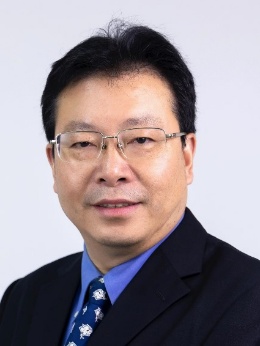
Prof. Jiliu Zhou
Chengdu University of Information Technology, China
Biography: Jiliu Zhou, PhD, Professor. He previously served as President of Chengdu University of Information Technology and Chengdu University. His main research interests include computer graphics and image processing, pattern recognition and artificial intelligence, fractional-order calculus algorithms and their applications in information processing. He is a recipient of the Special Government Allowance of the State Council, winner of the Sichuan Provincial Outstanding Talent Award, a leading academic and technical talent in Sichuan Province, an expert with outstanding contributions in Sichuan Province, an innovation leader in the “Tianfu Ten-Thousand Talents Program”, and a Famous Teacher of Higher Education in Sichuan Province. He has received numerous awards, including the Second Class Prize of the State Natural Science Award, the First Class Prize of Natural Science from the Ministry of Education, the First, Second and Third Class Prizes of Sichuan Science and Technology Progress Award, and the First Class Prize of Sichuan Computer Science and Technology Award.

Prof. Xiao Huang
Zhejiang Normal University, China
Biography: Dr. Huang Xiao is Professor, Dean of Joint Educational Institute of Zhejiang Normal University and University of Kansas; and Director of the Science Education Research Center. Selected as an expert in the “National Training Program” of the Ministry of Education, an international ISO school enterprise cooperation international standard TC/286/WG 4 expert, a science and technology expert from the Ministry of Science and Technology, an outstanding teacher for the National Education Master’s degree, and the Zhejiang Province 151 Talent Project. Served as assistant editor for HPS&ST Newsletter Asia, and vice chairman of the Science Education Branch of the Chinese Society of Education (CSE), the Deputy Chairman of the Science Teacher Education Committee of the China Association of Children’s Science Instructors (CACSI), a member of the Provincial Basic Education Curriculum Reform Professional Guidance Committee, and the Deputy Chairman of the Provincial College Student Internship and Training Teaching Guidance Committee. Led 8 key projects including the National Social Science Foundation (Education), the Ministry of Science and Technology, and the Provincial Philosophy and Social Science Foundation. Published over 60 papers in top international journals such as JRST, JET, RISE etc., as well as important domestic education journals; The main research directions are science education, teacher education, STEM education etc.
Panelists
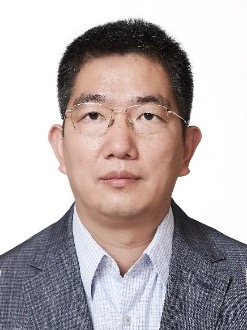
Dr. Chen Yang
Institute of Software, Chinese Academy of Sciences, China
Biography: Dr Chen Yang is currently at the Institute of Software, Chinese Academy of Sciences. He serves as the Deputy Head of WG7 Working Group under the National Cybersecurity Standardization Technical Committee, Deputy Director of the Youth Working Committee of the Chinese Cryptologic Society, and Deputy Secretary-General of the National Industrial Cybersecurity Industry Development Alliance, etc. He has led and participated in the compilation of more than 30 national cybersecurity standards, and has received multiple provincial and ministerial-level science and technology awards.
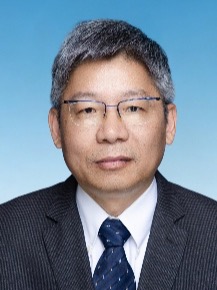
Prof. Zengwei Zheng
Hangzhou City University, China
Biography: He received the B.S and M. c degrees in Computer Science and Western Economics from Hangzhou University, China in 1991 and 1998, respectively. He received the Ph. D degree in Computer Science and Technology from Zhejiang University, China in 2005. He is currently a Qiantang Distinguished Professor of the School of Computer and Computing Science, the director of Zhejiang Provincial Engineering Research Center for Intelligent Plant Factory, the director of Zhejiang International Cooperation Base for Science and Technology on Artificial Intelligence of Things (AIoT) Technology & Systems, the director of Hangzhou Key Laboratory for IoT Technology & Application at Hangzhou City University. His research interests include Artificial Intelligence of Things (AIoT), Artificial Intelligence, Pervasive Computing, High-performance embedded computing and Digital Agriculture. He is a senior member of the CCF and a member of the IEEE.
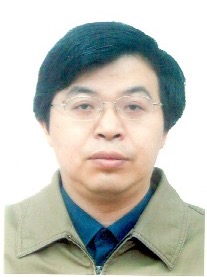
Prof. Benxiong Huang
Huazhong University of Science and Technology, China
Biography: Dr. Benxiong Huang is a professor at the School of Electronic Information and Communications in Huazhong University of Science and Technology, vice director of National Engineering Laboratory of Next generation Internet access system. His research interests cover Cyber-Physical-Social Systems, Service Computing, Big data and Industrial Intelligence. He is the laureate of Fund for Distinguished Young Scholar of Hubei province, and served as Chairman of the third YOCSEF in Hubei province, member of specialist group of the National Basic Research Program of China (973 Program).
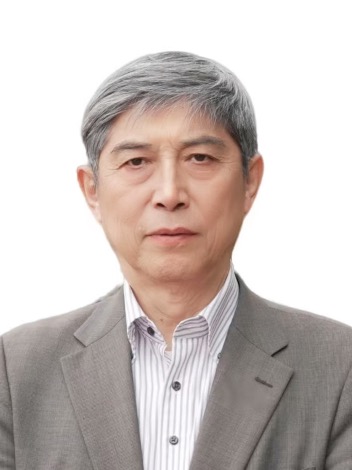
Prof. Zhen Liu
Wenzhou Medical University, China
Biography: Liu Zhen is a foreign fellow of the Engineering Academy of Japan (EAJ). He is currently a professor and academic dean at the School of Rehabilitation Medicine, Wenzhou Medical University. Also, he is serving as a chief scientist of artificial intelligence and dean of innovation research institute at iRest health technology company, Zhejiang, China. He is an honorary professor at Nagasaki Institute of Applied Science, Japan. His bachelor degree of Engineering and Master’s degree of Engineering from Jilin University of Technology, China, and PhD in Information Science from Tohoku University, Japan. His main research areas include artificial intelligence, big data and data mining, and welfare engineering.
Coordinators
Dr. Wanlun Ma, Swinburne University of Technology, Australia
Dr. Lifei Wang, Hosei University, Japan
Email: ffrise.forum@gmail.com
← Back to FFRise Forum