Keynotes
Machine reasoning under epistemic uncertainty: Bayesian inference and graphical models using imprecise probabilities
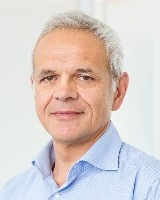
Branko Ristic, Principal Research Fellow
RMIT University, Australia
Abstract: Machines are increasingly asked to reason over large volumes of uncertain, heterogeneous information: sensor measurements, natural-language reports such as “possible warship,” and expert domain knowledge. Much of this uncertainty is epistemic, arising from lack of knowledge rather than randomness. Standard Bayesian inference handles it by forcing imprecise knowledge into precise probabilities, and as a result it can be confidently wrong. This talk argues for integrity in machine reasoning: a model should represent exactly the knowledge available, no more and no less. We introduce imprecise probabilities, where belief is represented by credal sets (closed convex sets of probability distributions). This framework includes belief functions, possibility theory, and random sets as special cases. We show how Walley’s generalised Bayes rule can be computed in practice using bisection and bilinear programming. We then lift it to large models through credal valuation networks, a valuation algebra that supports local computation. Examples range from classification with an imprecise confusion matrix to ongoing threat assessment onboard an underwater vehicle. In these examples, the resulting probability bounds always contain the ground truth and are tighter than those of evidential networks. We close with the computational cost and open problems.
Biography: Branko Ristic received the Ph.D. degree from Queensland University of Technology in 1995. After research and engineering positions in the former Yugoslavia and in Australia, he joined the Defence Science and Technology Organisation (now Defence Science and Technology Group, DSTG) in 1996. In 2003–04 he spent a year of study leave at IRIDIA, Université libre de Bruxelles, Belgium. Since 2015 he has been a Principal Research Fellow in the School of Engineering at RMIT University, where he has led some 20 research projects, mainly funded by DSTG. He is co-author of two books, Beyond the Kalman Filter: Particle Filters for Tracking Applications (Artech House, 2004) and Particle Filters for Random Set Models (Springer, 2013), as well as over 120 journal articles and 10 book chapters. His research interests include information fusion, Bayesian estimation, target tracking, Monte Carlo methods, search techniques, sensor control, and machine reasoning under uncertainty.
Machine Unlearning: Ideas and Strategies
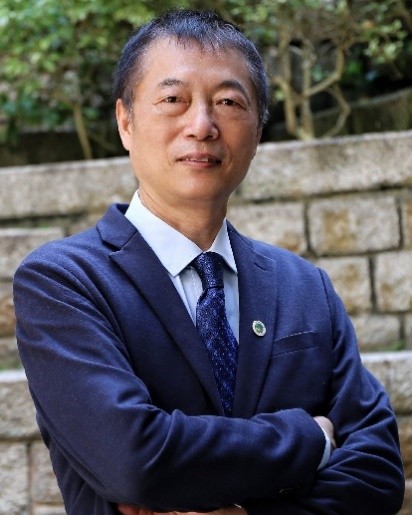
Wanlei Zhou, Professor
City University of Macau, Macao SAR, China
Abstract: Over the past decade, machine learning has experienced remarkable advancements, positively impacting our daily lives. Alongside this progress, a distinctive requirement has emerged—stemming from the AI era, in particular, from privacy concerns, usability considerations, and “the right to be forgotten”—leading to the development of a new concept known as machine unlearning. In this talk, I will first give a comprehensive exploration of machine unlearning and the reasons behind the existence of this necessity. Then, I will describe the methods and technologies used in machine unlearning. Third, I will talk about developments in this field, especially through a number of our recent work on machine unlearning as examples.
Biography: Professor Wanlei Zhou is currently the Vice Rector (Academic Affairs), City University of Macau, Macao SAR, China. He received the B.Eng and M.Eng degrees from Harbin Institute of Technology, Harbin, China in 1982 and 1984, respectively, and the PhD degree from The Australian National University, Canberra, Australia, in 1991, all in Computer Science and Engineering. He also received a DSc degree (a higher Doctorate degree) from Deakin University in 2002. Before joining City University of Macau, Professor Zhou held various positions including the Head of School of Computer Science in University of Technology Sydney, Australia, the Alfred Deakin Professor, Chair of Information Technology, Associate Dean, and Head of School of Information Technology in Deakin University, Australia. Professor Zhou also served as a lecturer in University of Electronic Science and Technology of China, a system programmer in HP at Massachusetts, USA; a lecturer in Monash University, Melbourne, Australia; and a lecturer in National University of Singapore, Singapore. His main research interests include security, privacy, and distributed computing. Professor Zhou has published more than 500 papers in refereed international journals and refereed international conferences proceedings, including many articles in IEEE transactions and journals. Prof Zhou is an IEEE Life Fellow.
Data Mining and Machine Learning for Analysis of Network Traffic

Ljiljana Trajkovic, Professor
Simon Fraser University, Canada
Abstract: Collection and analysis of data from deployed networks is essential for understanding communication networks. Hence, data mining and statistical analysis of network data have been employed to determine traffic loads, analyze patterns of users' behavior, predict future network traffic, and detect traffic anomalies. The Internet has historically been prone to failures and attacks that significantly degrade its performance, affect the Internet connectivity, and cause routing disconnections. Frequent cases of various cyber threats have been encountered over the years and, hence, detection of anomalous behavior is a topic of great interest in cybersecurity. In described case studies, traffic traces collected by various collection sites are used to classify network anomalies. Various anomaly and intrusion detection approaches based on machine learning have been employed to analyze collected data. Deep learning, broad learning, gradient boosted decision trees, and reservoir computing algorithms were used to develop models based on collected datasets that contain Internet worms, viruses, power outages, ransomware events, router misconfigurations, Internet Protocol hijacks, and infrastructure failures in times of conflict. The reported results indicate that while performance of machine learning models greatly depends on the used datasets, they are viable tools for detecting the Internet anomalies.
Biography: Ljiljana Trajkovic received the Dipl. Ing. degree from University of Pristina, Yugoslavia, the M.Sc. degrees in electrical engineering and computer engineering from Syracuse University, Syracuse, NY, and the Ph.D. degree in electrical engineering from University of California at Los Angeles. She is currently a professor in the School of Engineering Science, Simon Fraser University, Burnaby, British Columbia, Canada. Her research interests include communication networks and dynamical systems. Dr. Trajkovic served as IEEE Division X Delegate/Director, President of the IEEE Systems, Man, and Cybernetics Society, and President of the IEEE Circuits and Systems Society. She serves as Editor-in-Chief of the IEEE Transactions on Human-Machine Systems. She is a Distinguished Lecturer of the IEEE Systems, Man, and Cybernetics Society and was a Distinguished Lecturer of the IEEE Circuits and System Society. She is a Fellow of the IEEE.
Frontiers in Specialised AI: From Vision-Language Data Pipelines to DRL-Based Compiler Optimisation
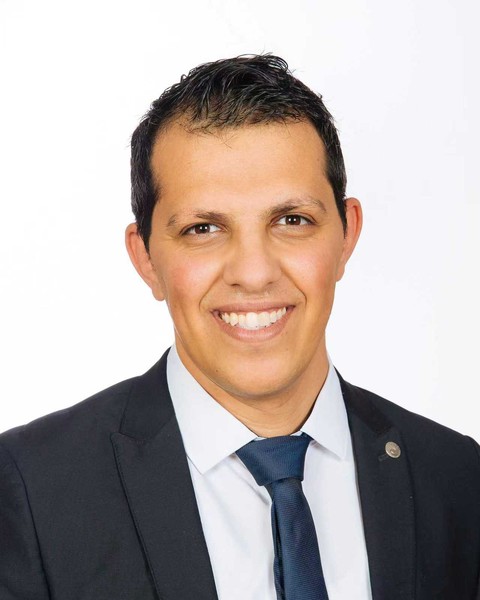
Sahraoui Dhelim, Assistant Professor
Dublin City University, Ireland
Abstract: As artificial intelligence shifts from broad foundation models toward specialized engineering solutions, custom AI architectures are reshaping how we address domain-specific computational challenges. This keynote explores the power and adaptability of specialized machine learning paradigms across two distinct operational frontiers: automated multimodal dataset curation and low-level system optimization.
First, we examine the deployment of Vision-Language Models (VLMs) to unlock unstructured historical artifacts by automating the digitization, transcription, and semantic tagging of complex Arabic manuscripts. We demonstrate how VLMs handle intricate calligraphic styles, diacritics, and physical degradation to synthesize high-fidelity datasets at scale. Second, we pivot to systems engineering, illustrating how Deep Reinforcement Learning (DRL) navigates the massive search spaces inherent in compiler optimization, specifically phase ordering and instruction scheduling. DRL agents learn performance heuristics that consistently outpace traditional compiler passes.
By examining both domains through the lens of high-dimensional, irregular decision spaces, this talk presents actionable methodologies for designing resilient, domain-tailored AI pipelines across data-centric and compute-centric infrastructure.
Biography: Dr. Sahraoui Dhelim is the research director of the School of Computing at Dublin City University. Previously, he was a senior researcher at University College Dublin from 2021 to 2024 and a Visiting Researcher at Ulster University from 2020 to 2021.
He earned his Ph.D. in Computer Science and Technology from the University of Science and Technology Beijing. He also holds a Master's degree in Networking and Distributed Systems from the University of Laghouat, and a Bachelor's degree in Computer Science from the University of Djelfa.
His scholarly contributions include over 110 peer-reviewed publications, complemented by editorial responsibilities at leading journals and conferences. He was a keynote speaker at the International Conference on Applied Artificial Intelligence and Emerging Technologies (AAIET 2025). He received the IEEE HITC Award for Excellence in Hyper-Intelligence (Technical Achievement).
His professional recognition includes Fellow HEA, he also earned the Universal Design in Teaching and Learning badge. Universal Design for Learning (UDL).