
FFRise: Forum for Future Research, Innovation and Education
— Shaping the Future in the Age of LLMs
Why FFRise?
Large Language Models (LLMs) are changing more than how we use AI. By making knowledge increasingly accessible, interactive, and generative, they are beginning to reshape how we discover, create, and learn.
What will this mean for the future of research, innovation, and education? How can we harness the emerging capabilities of LLMs while understanding their limitations and using them responsibly?
FFRise brings together researchers, innovators, educators, and forward-looking thinkers to explore these questions — not simply to discuss what LLMs can do today, but to envision what they may enable tomorrow.
Three Panels, One Future
How will LLMs change the way knowledge is discovered?
From data-intensive science and the “Fourth Paradigm” to AI-assisted reasoning and autonomous scientific discovery, Panel-R explores how LLMs may transform the research process itself: asking questions, forming hypotheses, connecting knowledge across disciplines, designing experiments, and accelerating discovery.
How will LLMs transform the way innovations are created?
Innovation has traditionally depended on human creativity, experience, and methodologies such as TRIZ. Panel-I explores how LLMs, combined with data and computational intelligence, may make innovation more dynamic, scalable, and collaborative — while opening new possibilities for human-AI co-creation.
How will LLMs influence teaching and learning?
When knowledge is available on demand and AI can explain, question, and generate, education faces a fundamental challenge: what should humans learn, and how should they learn it? Panel-E explores LLMs not merely as answer machines, but as potential tutors, Socratic partners, and tools for personalized learning and cognitive empowerment.
Click a panel title to see the panel web page.
Questions Across the Panels
Across Research, Innovation, and Education, the same fundamental questions remain: How can we make LLMs more reliable, reasoning-capable, interpretable, and responsible? Where should humans lead, where can AI assist, and how might the two work together?
These questions connect all three panels and point toward the next generation of AI — and the future relationship between human and machine intelligence.
Join the Conversation
FFRise is not about predicting a predetermined future. It is about bringing different perspectives together to question assumptions, explore possibilities, and help shape what comes next.
Whether you are a researcher, innovator, educator, student, or simply curious about what lies ahead, we invite you to join the conversation. Engage with leading international experts, gain fresh insights into AI-driven research, innovation, and education, and explore together how LLMs may reshape the way we discover, create, and learn.
Research. Innovate. Educate. Rise together.

Forum Chairs
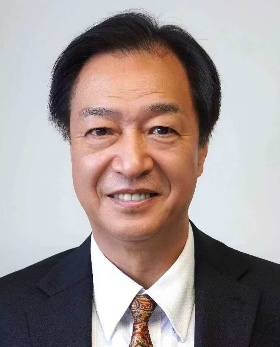
Prof. Jianhua Ma
Hosei University, Japan
Biography: Jianhua Ma is a professor in the Faculty of Computer and Information Sciences and a director in the Institute of Integrated Science and Technology (IIST), Hosei University, Japan. He is one of pioneers in research on Hyper World and Cyber World (CW) since 1996. He first proposed Ubiquitous Intelligence (UI) towards Smart World (SW), which he envisioned in 2004, and was featured in the European ID People Magazine in 2005. He has conducted several unique CW-related projects including the Cyber Individual (Cyber-I), which was highlighted on the IEEE Computing Now in 2011. He has founded IEEE Conferences on Ubiquitous Intelligence and Computing (UIC), Pervasive Intelligence and Computing (PICom), Cyber Physical and Social Computing (CPSCom), Internet of Things (iThings), and Internet of People (IoP). He is a chair of IEEE SC Technical Committee on Hyper-Intelligence, a co-chair of IEEE SMC Technical Committee on Cybermatics, and a founder of IEEE CIS Technical Committee on Smart World.
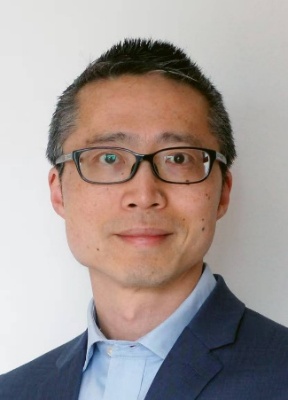
Prof. Yang Xiang
Monash University, Australia
Biography: Professor Yang Xiang is a Full Professor at Monash University, Australia, and a Fellow of the IEEE. His research spans cybersecurity and artificial intelligence, with particular expertise in software security, network systems, and the privacy and robustness of algorithms. Over more than two decades he has authored over 300 peer-reviewed publications in premier venues including ACM CCS, IEEE S&P, and USENIX Security. He serves as Editor-in-Chief of SpringerBriefs in Information Security and Cryptography and as Associate Editor of ACM Computing Surveys, and has previously served as Associate Editor for several IEEE Transactions focused on dependable computing and distributed systems. He is a current member of the Australian Research Council's College of Experts.
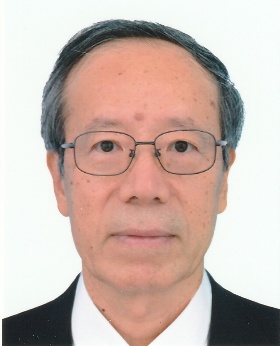
Prof. Qiangfu Zhao
Zhejiang Normal University, China
Biography: Professor Qiangfu Zhao graduated from Tohoku University with a Doctor of Engineering degree in Electronic Engineering in 1988. From 1991 to 1993, he was an associate professor at Beijing Institute of Technology; from 1993 to 1995, he was an associate professor at Tohoku University (Japan); from 1995 to 1999, he was an associate professor at the University of Aizu (Japan); since 1999, he has been a tenured full professor at the U-Aizu. He became Professor Emeritus of U-Aizu and started the second life at Zhejiang Normal University from April 2026. He served as the Vice President of U-Aizu; AEs of several international journals; and chair of the Technical Committee on Awareness Computing, IEEE SMC Society. Professor Zhao published more than 200 academic papers related to optimal system design, signal processing, image processing/recognition, neural computing, evolutionary computing, awareness computing, and machine learning in international journals and international conferences.
Coordinators
Wanlun Ma, Swinburne University of Technology, Australia
Lifei Wang, Hosei University, Japan
Email: ffrise.forum@gmail.com