Panel-I | Innovation in the Age of LLMs
— How will LLMs transform the way innovations are created?
(Part of FFRise Forum)
Innovation has traditionally depended on human creativity, experience, and methodologies such as TRIZ. Panel-I explores how LLMs, combined with data and computational intelligence, may make innovation more dynamic, scalable, and collaborative — while opening new possibilities for human-AI co-creation.
Background: Generative AI (GenAI) — including large language models, image-generation models, and other multimodal systems — is rapidly transforming the way individuals, organizations, and industries generate ideas, solve problems, and create innovative products and services. From brainstorming, knowledge synthesis, patent analysis, technology forecasting, and product design to software development, entrepreneurship, and business transformation, GenAI-empowered innovation is creating new opportunities to accelerate innovation across diverse disciplines and industries.
At the same time, the adoption of GenAI for innovation also raises important challenges, including reliability, explainability, intellectual property, creativity evaluation, human–AI collaboration, and the responsible use of AI-generated ideas. These issues call for interdisciplinary discussions among researchers, innovators, entrepreneurs, industry leaders, and policymakers.
Goal: This panel aims to bring together invited experts to share their perspectives on the opportunities, challenges, and future directions of AI-empowered innovation. The discussion will focus on how GenAI can responsibly and effectively support inventive problem solving, technology transfer, entrepreneurship, and human–AI collaborative innovation, enabling people and AI to co-create novel solutions for complex real-world challenges across academia and industry.
Format: The panel will be organized as an interactive discussion session. The panelists will first provide short position statements, followed by a moderated discussion and audience Q&A.
Panel Chairs
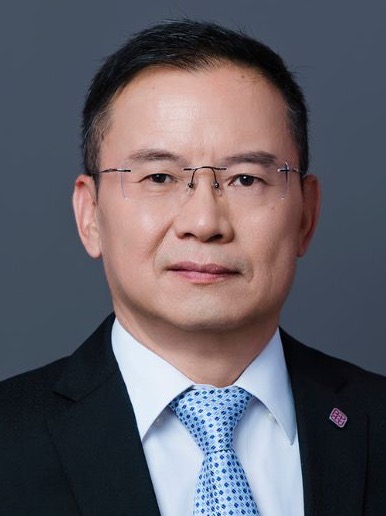
Prof. Qing Li
The Hong Kong Polytechnic University, Hong Kong
Biography: Qing Li is currently a Chair Professor (Data Science) and the Head of the Department of Computing, the Hong Kong Polytechnic University. Formerly, he was the founding Director of the Multimedia software Engineering Research Centre (MERC), and a Professor at City University of Hong Kong where he worked in the Department of Computer Science from 1998 to 2018. Prior to these, he has also taught at the Hong Kong University of Science and Technology and the Australian National University (Canberra, Australia). Prof. Li served as a consultant to Microsoft Research Asia (Beijing, China), Motorola Global Computing and Telecommunications Division (Tianjin Regional Operations Center), and the Division of Information Technology, Commonwealth Scientific and Industrial Research Organization (CSIRO) in Australia.
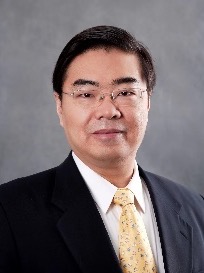
Prof. Zhong Chen
Peking University and BNBU, China
Biography: Zhong Chen is currently a Chair Professor and Dean of the School of AI and Liberal Arts, Beijing Normal-Hong Kong Baptist University (BNBU), Professor and Founding Director of Metaverse Technology Institute in School of Computer Sciences at Peking University. Formerly, he has been assumed the founding dean position of the School of Software and Microelectronics, Peking University from 2002 to 2010, Chairman of CS department from 2011-2015. He is the fellow and managing director of China Computer Federation (CCF), Vice Director of the Steering Committee of Higher Education on Computer Science and Technology of China, Vice-Chair of China Open Source Software Promotion Union (COPU), Director of FinTech and Algorithms Expert Committee of China Society for Industrial and Applied Mathematics (CSIAM) etc.
Panelists

Dr. Toshiaki Miyazaki
National Institute of Advanced Industrial Science and Technology (AIST), Japan
Biography: Dr. Toshiaki Miyazaki is an Invited Senior Researcher at the National Institute of Advanced Industrial Science and Technology (AIST), Japan. He served as President and Chair of the Board of Executives of the University of Aizu, Fukushima, Japan, from April 2020 to July 2023. Prior to this appointment, he held several leadership positions at the University of Aizu, including Dean of the School of Computer Science and Engineering (2014–2020), Chair of the Graduate Department of Computer and Information Systems (2008–2014), Director of the Center for Advanced Information Science and Technology (CAIST) (2013–2014), Deputy Director of CAIST (2012–2013), and Deputy Director of the Revitalization Center (2013–2014). His research interests include AI accelerators, reconfigurable hardware systems, adaptive networking technologies, wireless sensor networks, and autonomous systems. Before joining the University of Aizu, he spent 22 years at NTT Laboratories, where he conducted research on VLSI CAD systems, telecommunications-oriented field-programmable gate arrays (FPGAs) and their applications, active networking, peer-to-peer communications, and ubiquitous networking environments. Dr. Miyazaki has authored or coauthored more than 400 technical publications and holds 52 patents. He is a Member of The Engineering Academy of Japan (EAJ) and a Senior Member of IEEE, the Information Processing Society of Japan (IPSJ), and the Institute of Electronics, Information and Communication Engineers (IEICE).

Prof. Jiannong Cao
The Hong Kong Polytechnic University, Hong Kong
Biography: Professor Cao is currently the Otto Poon Charitable Foundation Professor in Data Science, Chair Professor of Distributed and Mobile Computing in the Department of Computing at The Hong Kong Polytechnic University (PolyU). He is also the Vice President (Education) and Director of the Institute for Higher Education Research and Development (IHERD) at PolyU. He served as Head of the Department of Computing, Dean of the Graduate School, and Head of the College of Undergraduate Researchers and Innovators (CURI), and the founding director of Research Institute for AIoT and University Research Facility in Big Data Analytics at PolyU. Professor Cao is a member of Academia Europaea, a fellow of the Hong Kong Academy of Engineering, a fellow of IEEE, a fellow of the CCF, and a distinguished member of the ACM. He served as the Chair of the Technical Committee on Distributed Computing of the IEEE Computer Society from 2012 to 2014. In 2017, he received the Overseas Outstanding Contribution Award from the China Computer Federation.
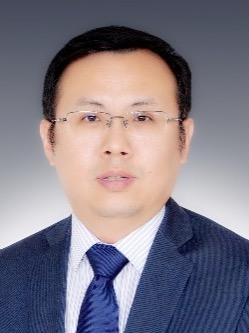
Prof. Lizhen Cui
Shandong University, China
Biography: Lizhen Cui (IET Fellow), is a Professor at Shandong University. He received his Ph.D. degree from Shandong University in 2005, and has been a faculty member at Shandong University since 2006. Since 2019, he has been serving as Dean of the School of Software, Co-Dean of the Joint SDU-NTU Centre for Artificial Intelligence Research (C-FAIR), and Deputy Director of the National Engineering Laboratory for E-Commerce Transaction Technologies. He is a recipient of the National High-Level Talent program, Chief Scientist of the National Key R&D Program of China. His research interests include software and data engineering, and trustworthy artificial intelligence. He has led over 30 national and provincial research projects, published more than 200 high-level academic papers, and has been listed among the top 2% of scientists worldwide. As the primary contributor, he has won the National Teaching Achievement Second Prize, Shandong Province Science and Technology Progress First Prize, and the Ministry of Education Scientific Research Outstanding Achievement Second Prize, among others.
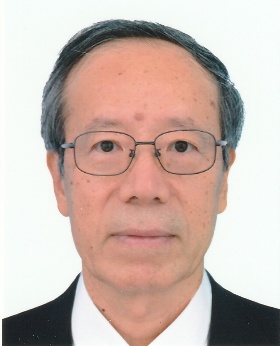
Prof. Qiangfu Zhao
Zhejiang Normal University, China
Biography: Professor Qiangfu Zhao graduated from Tohoku University with a Doctor of Engineering degree in Electronic Engineering in 1988. From 1991 to 1993, he was an associate professor at Beijing Institute of Technology; from 1993 to 1995, he was an associate professor at Tohoku University (Japan); from 1995 to 1999, he was an associate professor at the University of Aizu (Japan); since 1999, he has been a tenured full professor at the U-Aizu. He became Professor Emeritus of U-Aizu and started the second life at Zhejiang Normal University from April 2026. He served as the Vice President of U-Aizu; AEs of several international journals; and chair of the Technical Committee on Awareness Computing, IEEE SMC Society. Professor Zhao published more than 200 academic papers related to optimal system design, signal processing, image processing/recognition, neural computing, evolutionary computing, awareness computing, and machine learning in international journals and international conferences.

A/Prof. Claudio Miceli
Federal University of Rio de Janeiro, Brazil
Biography: Claudio Miceli de Farias graduated in Computer Science (2008), and holds a master's degree (2010) and a PhD (2014) in Computer Science from the Federal University of Rio de Janeiro. He was chosen by MCTI to represent Brazil at the BRICS Young Scientists Forum in the area of Cyber-Physical Systems (2021). The professor was also awarded the Young Scientist of our state scholarship by FAPERJ. Currently, the aforementioned professor works in the Graduate Program in Systems Engineering and Computer Science (PESC-COPPE-UFRJ) and at the Tércio Pacitti Institute for Computer Research and Applications at UFRJ. In 2022, the aforementioned professor won the IEEE Hype-Intelligence Workgroup Middle Career Researcher Award for his contributions to the area. The professor's main topics of interest are smart cities, the Internet of Things, Data Fusion, and Security.
Coordinators
Dr. Wanlun Ma, Swinburne University of Technology, Australia
Dr. Lifei Wang, Hosei University, Japan
Email: ffrise.forum@gmail.com
← Back to FFRise Forum