Panel-R | Research in the Age of LLMs
— How will LLMs change the way knowledge is discovered?
(Part of FFRise Forum)
From data-intensive science and the “Fourth Paradigm” to AI-assisted reasoning and autonomous scientific discovery, Panel-R explores how LLMs may transform the research process itself: asking questions, forming hypotheses, connecting knowledge across disciplines, designing experiments, and accelerating discovery.
Background: Generative AI (GenAI) — including large language models, image-generation models, and other multimodal systems — is rapidly transforming the ways in which researchers, educators, students, and institutions conduct academic work. From literature review, scientific writing, coding, data analysis, and research collaboration to discovery of new laws or new knowledge governing both the physical and virtual worlds, GenAI is creating new opportunities across various research fields.
At the same time, the adoption of GenAI also raises important challenges, including reliability, academic integrity, responsible use, privacy, intellectual property, fairness, and governance. These issues require interdisciplinary discussion among researchers, academic leaders, and practitioners.
Goal: This panel aims to bring together invited experts to share their perspectives on the opportunities, challenges, and future directions of GenAI-empowered research. The discussion will focus on how GenAI can be responsibly and effectively used to support cross-disciplinary research, scientific discovery, and international collaboration.
Format: The panel will be organized as an interactive discussion session. The panelists will first provide short position statements, followed by a moderated discussion and audience Q&A.
Panel Chairs
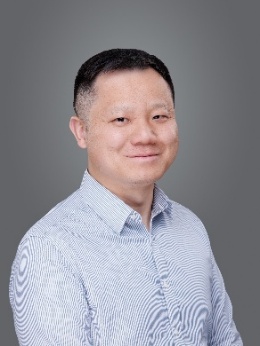
A/Prof. Chao Chen
RMIT University, Australia
Biography: Dr Chao Chen is currently an Associate Professor in AI and Data Analytics at RMIT University and Director of the RMIT Enterprise AI and Data Analytics Hub, where he leads applied AI research and industry collaboration to support the trusted adoption of AI. He received his PhD degree in Information Technology from Deakin University in 2017 and worked as a Data Scientist at Telstra from 2016 to 2018, before holding academic positions at Swinburne University of Technology and James Cook University. His research bridges cybersecurity and AI, spanning AI for cybersecurity and the security, privacy, and trustworthiness of AI systems — foundations for the responsible use of AI and GenAI in business and research. Through the Hub, he works with industry and government partners including Microsoft, CSIRO, BaptistCare, and Wyndham City Council to translate research into practice, from industry-funded PhD programs to GenAI workshops delivered as part of Australia’s National AI Month and AI-for-business programs for local communities. He has also contributed to national AI policy, including submissions to the Senate Select Committee on Adopting Artificial Intelligence and the Department of Industry, Science and Resources’ consultation on safe and responsible AI. He has published more than 80 research papers in high-quality journals and CORE rank A*/A conferences, such as AAAI, IJCAI, KDD, RAID, and ESORICS.
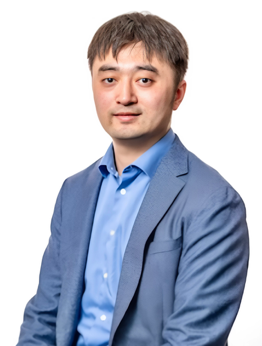
A/Prof. Xingliang Yuan
The University of Melbourne, Australia
Biography: Dr Xingliang Yuan is currently an Associate Professor in the School of Computing and Information Systems at The University of Melbourne and an Australian Research Council (ARC) Future Fellow. He received his PhD degree from City University of Hong Kong in 2016 and held a faculty position at Monash University from 2017 to 2024 before joining the University of Melbourne. His research focuses on data security and privacy, including secure networked systems, encrypted data processing, trustworthy machine learning, and the security of modern AI deployment. His work has been published in top-tier security and systems venues such as ACM CCS, IEEE S&P, USENIX Security, NDSS, IEEE TDSC, and IEEE TIFS, and has been recognised with the Best Paper Award at ESORICS 2021 and an Honourable Mention Award at USENIX Security 2025. His research has been supported by the ARC, CSIRO, the Australian Department of Home Affairs, and the Australian Department of Health and Aged Care. He serves on the editorial boards of IEEE Transactions on Dependable and Secure Computing (TDSC) and IEEE Transactions on Services Computing (TSC), and has served as General Co-Chair of RAID 2025 and General Chair of IEEE ICDCS 2027. He is a Senior Member of the IEEE.
Panelists
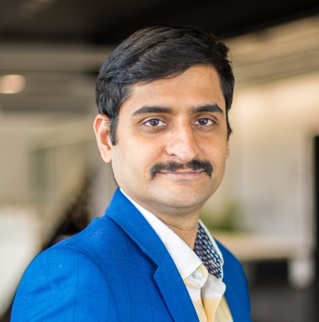
Prof. Prem Prakash Jayaraman
Swinburne University of Technology, Australia
Biography: Prof. Jayaraman is a globally recognised researcher and academic leader in the areas of digital manufacturing, distributed systems, and emerging technologies. He serves as Director of Swinburne’s Factory of the Future and Digital Innovation Lab, and as Deputy Director of the ARC Industrial Transformation Research Hub for Future Digital Manufacturing. He leads Australia’s only university-based Industry 5.0 program for small-to-medium enterprises, delivered by industry professionals to help manufacturing businesses navigate the transition to advanced digital manufacturing technologies. His research spans distributed systems, the Internet of Things, and applied AI, and has attracted over $20 million in competitive external research funding from industry, government, and the Australian Research Council. He has co-authored over 170 papers in several highly ranked journals and has been ranked in the top 2% of the world’s most cited researchers by Clarivate Analytics every year since 2021. Prof. Jayaraman has received three Vice-Chancellor Awards for excellence in translating research into industry outcomes and impact.
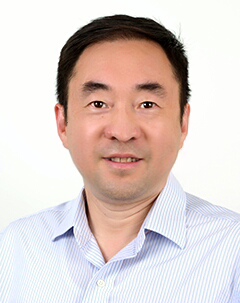
Prof. Yan Wang
Macquarie University, Australia
Biography: Yan Wang is a Full Professor in the School of Computing at Macquarie University, Australia, and Research Director of the Macquarie University Frontier AI Research Centre (FAIR). His research interests include responsible/trustworthy AI, data and predictive analytics, AI safety and security, trust management, and social computing. His research has been published in leading international conferences including AAAI, AAMAS, ICDE, IJCAI, KDD, NeurIPS, SIGIR, and WWW, and in journals including CSUR, TIST, TKDE, TOIS, TSC, and TWEB. Prof. Wang has served on the editorial boards of several international journals, including IEEE Transactions on Services Computing (TSC) and ACM Transactions on Intelligent Systems and Technology (TIST). He has also served as a General Co-Chair or Program Co-Chair for more than 10 international conferences. He received the 2017 IEEE TC-SVC Outstanding Service Award from the IEEE Technical Committee on Services Computing (TCSVC), IEEE Computer Society.

Prof. Seng Loke
Deakin University, Australia
Biography: Seng Loke is a Professor in Computer Science at the School of Information Technology, Deakin University, Australia. He currently holds, and has previously held, multiple leadership roles within the university, including serving as co-director of the Robotics & Internet of Things Lab and, previously, as Director of the Centre for Software, Systems & Society (CS3) at Deakin’s School of Information Technology. He also previously served as an Adjunct Professor in both the School of Engineering and Mathematical Sciences at La Trobe University and the School of Business and Tourism at Southern Cross University. Seng Loke’s research interests mostly relate to the concept of the Internet of Things, ranging from distributed systems, smart/AI things, urban robots, and smarter cities to cooperative vehicles, edge computing, pervasive computing, IoT-assisted AgeTech, ethics for smart devices, and quantum Internet computing. He coordinates the Deakin University Quantum Computing Research Network, a Deakin University-wide network focusing on quantum computing and its applications. He recently wrote From Distributed Quantum Computing to Quantum Internet Computing: An Introduction (Wiley, November 2023). He also co-wrote The Automated City: Internet of Things and Ubiquitous Artificial Intelligence (Springer, 2021).
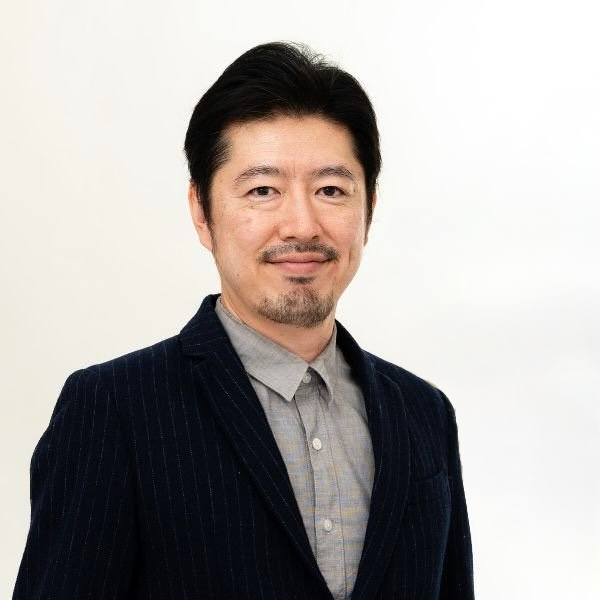
Prof. Naohiro Hayashibara
Kyoto Sangyo University, Japan
Biography: Naohiro Hayashibara is a Professor in the Faculty of Information Science and Engineering at Kyoto Sangyo University, Japan. He received his PhD in Information Science from the Japan Advanced Institute of Science and Technology (JAIST) in 2004, where he then worked as a postdoctoral fellow until 2005. He was a Research Associate at Tokyo Denki University, Japan, from 2005 to 2008 and joined Kyoto Sangyo University in 2008. From 2022 to 2023, he was an Invited Professor at the University of Neuchâtel, Switzerland. His research interests include distributed systems and algorithms, system dependability, security, and metaheuristics. He leads the Dependable Distributed Systems Laboratory at Kyoto Sangyo University. His recent work focuses on the design and evaluation of algorithms for large-scale distributed systems and security protocols. He has been actively involved in the international research community, serving as General Chair of IEEE PRDC 2024 and IEEE DASC 2025.
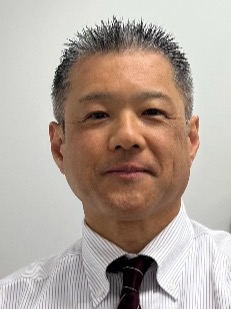
Prof. Hiroshi Masui
Kitami Institute of Technology, Japan
Biography: Hiroshi Masui is Vice President and Professor at Kitami Institute of Technology, Japan. He received his doctorate in science in 1998 and has developed an interdisciplinary research portfolio spanning computational nuclear physics, open science, and information and communication technologies. He previously served as Director of the university’s Information Processing Center. His research connects mathematical modeling and computational methods with practical information systems. His work encompasses scholarly databases and research data management, cloud and edge computing, and tourism informatics, including bus location systems and public transport optimization. His recent collaborative research addresses edge service orchestration, privacy-preserving contact tracing, reinforcement learning for UAV-assisted disaster communications, and drone-based river monitoring. His publications have appeared in top journals including both Computer Sciences and Nuclear Physics. Combining university leadership with research across fundamental science and applied computing, he brings a broad perspective on how data, computational infrastructure, and intelligent systems can support scientific discovery and address societal challenges.
Coordinators
Dr. Wanlun Ma, Swinburne University of Technology, Australia
Dr. Lifei Wang, Hosei University, Japan
Email: ffrise.forum@gmail.com
← Back to FFRise Forum